Characters
The main characters (and related lore) of Ultra Hyper Funk 5K...
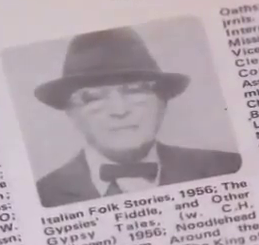
Moritz JagendorfMoritz A (Adolph) Jagendorf (August 24, 1888 – January 8, 1981) was an Austrian-American folklore author. Jagendorf was born in Czernowitz, Austria-Hungary. He moved to New York City around the age of 15. He earned his doctoral dental studies degree in 1916 from Columbia University. He helped revitalize the Pi Lambda Phi fraternity by founding the NY Alpha chapter. While practicing as a dentist, Jagendorf's interests remained in the folklore of Europe, Asia, and the United States. He wrote several stories for children based on folktales he had heard from these various cultures. He was a noted anarchist. He wrote for Hippolyte Havel's Revolt and co-edited The Road to Freedom with Harry Kelly. In an interview in 1978 he said, "The only progress is in the individual, in you yourself; and through progress you better the whole world. And that is as far as you can go. I said that in 1914 to Leonard Abbott and again in the 1920s and 1930s, and I still say it today." He helped to found the Free Theatre, was director of the Children's Playhouse, and was active in the following organizations: Mohegan Colony Association, Story League, Green Room Club, Overseas Press and the New York Folktale Society. He also wrote a book on making wines and other beverages: Folk Wines, Cordials & Brandies: How to Make Them, Along with the Pleasures of Their Lore. He was mentioned at the end of S01E06 (originally broadcast 22 March 1998) of the British comedy series This Morning With Richard Not Judy in an installment of the running joke Men of Achievement 1974. |
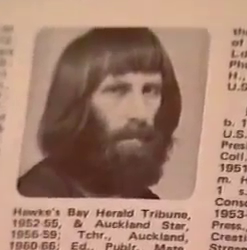
Robin DuddingRobin Nelson Dudding (7 December 1935 – 21 April 2008) was a New Zealand literary editor and journalist who founded the influential literary journal Islands (1972–1988). He was also editor of the literary journals Landfall (1966–1972) and Mate (1957–1966), and publisher of a number of novels and poetry and essay collections. He has been called the “most gifted and significant literary editor” of his generation, having given many New Zealand writers their first prominent outlet. Dudding was born in Hastings in the Hawke’s Bay, son of Ernest, a baker, and Winifred (née Hinton) a schoolteacher. He attended Hastings High School, where he developed an interest in writing and literature. Dudding was a cadet reporter at the Hawke's Bay Herald-Tribune from 1952 until moving to Auckland in the mid 1950s. He joined the Auckland Star, after a short time working as a freelance “seagull” labourer on the wharves. In 1959 he left the Star to train as a primary schoolteacher. While still a reporter, Dudding fell in with the Auckland literary set, whose gatherings revolved around the Queen’s Ferry pub in the central city. In 1957 he took over the co-editorship, and then full editorship, of the magazine Mate, whose first edition had been edited by the poet Kevin Ireland. Contributions to Mate 2 included Barry Crump’s first published story, as well as writing by Maurice Gee, Frank Sargeson and Ireland. Mate was produced from Dudding’s home in Torbay on Auckland’s North Shore, and he supported his unpaid literary endeavours and his growing family with full-time work as a reporter, and later teacher. In 1966 Dudding moved to Christchurch to take over the editorship of literary journal Landfall from founder Charles Brasch, and to be general editor of the Caxton Press. In 1972 he was fired from Caxton and founded his own magazine, Islands, once again supporting literary editing with other work, including freelance editing, teaching and gardening. The magazine was swiftly recognised as the “pre-eminent literary periodical of the 1970s”, and was published by Dudding, with occasional pauses, until 1988. There were 38 issues in all. From the mid-1980s Dudding wrote the Bookmarks column for the New Zealand Listener and was later a subeditor for the magazine. In 2003 he was guest editor of the annual online anthology Best New Zealand Poems. In 1976, an issue of Islands was devoted to the Ian Wedde novel Dick Seddon’s Great Dive, which won the 1977 Book Award for Fiction. The following year, Dudding published Kevin Ireland’s poetry collection Literary Cartoons, which won the 1979 Book Award for Poetry. Dudding was awarded Auckland University’s first Literary Fellowship in 1979. In April 2008 he was awarded an honorary doctorate for literature by Auckland University, but died of emphysema two days before the ceremony. His award was received on his behalf by his family. Dudding married Lois Yvonne Miller in 1958. They had five daughters and a son. He was an enthusiastic gardener and chicken breeder. He was a heavy smoker until his late 50s. In November 2016 Victoria University Press published a memoir about Dudding by his journalist son Adam Dudding, entitled My Father's Island, which is shortlisted in the general non-fiction category of the Ockham New Zealand Book Awards. He was mentioned in S01E04 (originally broadcast 8th March 1998) of the British comedy series This Morning With Richard Not Judy in an installment of the running joke Men of Achievement 1974. |
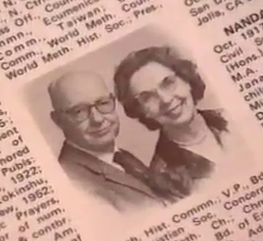
H. Warner MunnHarold Warner Munn (November 5, 1903 – January 10, 1981) was an American writer of fantasy, horror and poetry, best remembered for his early stories in Weird Tales. He was an early friend and associate of authors H. P. Lovecraft and Seabury Quinn. He has been described by fellow author Jessica Amanda Salmonson, who interviewed him during 1978, as "the ultimate gentleman" and "a gentle, calm, warm, and good friend." He was known for his intricate plotting and the careful research that he did for his stories, a habit he traced back to two mistakes made when he wrote his early story "The City of Spiders". A resurgence of interest in his work occurred during the 1970s due to its appearance in the Ballantine Adult Fantasy series and the successor fantasy series published with the imprint of Del Rey Books. In addition to writing, Munn collected books and classic pulp magazines, including Air Wonder Stories, Amazing Stories, Astounding and other science fiction titles, along with Argosy, Argosy All Story, Cavalier, Weird Tales (to the end of the Wright publication series), and others. Also in his library were self-manufactured books consisting of serialized stories extracted from magazines, notably works by George Allan England such as "Darkness and Dawn". About three fourths of his collection was ruined by exposure to weather during a relocation and had to be destroyed. During his last years Munn lived in Tacoma, Washington in a house he had built himself. He did his writing either in his living room or in the attic room that constituted his library. During this time he was working on an additional volume of the Merlin series to be called The Sword of Merlin, which he did not live to finish. He was befriended at this time by the young writer W. H. Pugmire, who was influenced by Munn's work. Merlin’s Ring was nominated for the 1975 Mythopoeic Fantasy Award and World Fantasy Award for Best Novel. He was also nominated for the World Fantasy Award for Life Achievement during 1977, 1979, and 1980, and the Balrog Award for Professional Achievement during 1981. His poetry collection The Book of Munn was nominated for the 1980 Balrog Award for the categories of Collection/Anthology and Professional Publication, and his last novel, The Lost Legion, was also nominated for the 1981 Balrog Award for Novel. He was guest of honor of the 1978 World Fantasy Convention, and won the Balrog Award for Poet during both 1980 and 1981. He also won the Clark Ashton Smith Award for Poetry, with which he is pictured on the inside of The Book of Munn. He was mentioned in S01E08 (originally broadcast 5 April 1998) of the British comedy series This Morning With Richard Not Judy in an installment of the running joke Men of Achievement 1974. |
[withdrawn character]This character has been removed. Do not contact the author with questions on this subject. You are ordered to forget you read this with immediate effect. |
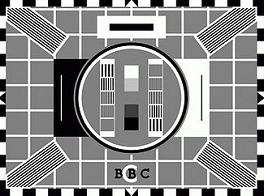
Test Card CTest Card C was a BBC television test card first broadcast in 1948. It was the first test card to resemble the famous Test Card F. It was also available as individual rolls of test film in the UK and many Commonwealth countries up until the end of the black-and-white television era. |